
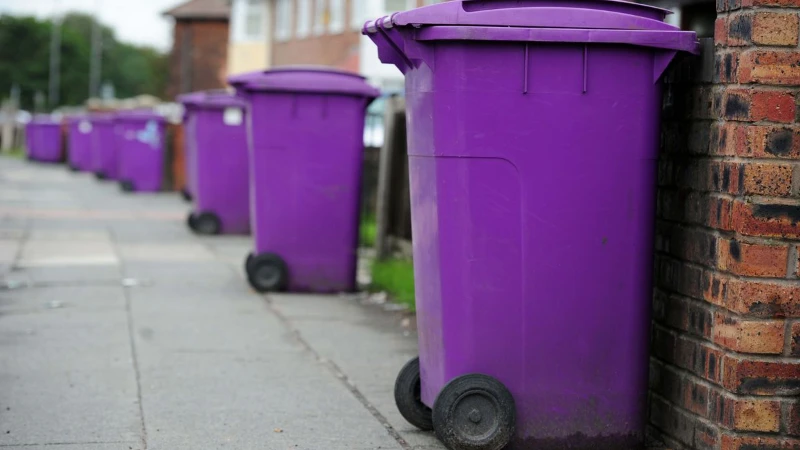
Move to Liverpool and, sooner or later, a stranger will ask you what colour your bin is. It isn’t small talk. It’s a test, and the right answer is purple.
Why are Liverpool’s bins purple? The short answer: red plus blue
Purple is what you get when you mix red and blue, and that is the whole point – that’s why Liverpool’s bins are purple. The colour is a blend of Liverpool’s red and Everton’s blue, picked so the council didn’t have to choose a side. The story goes that red bins were on the table first, and the worry was that handing half the city a bin in the other club’s colour would start a fight. Mike Storey, a former leader of the council, is reported to have confirmed the football explanation in 2018, which settled what plenty of people had assumed was an urban myth.
The bins themselves arrived around the turn of the millennium, when wheelie bins replaced the old black sacks and bins on many streets. They weren’t welcomed everywhere. They were reportedly nicknamed Daleks, and residents in conservation areas were particularly unhappy about having them parked outside Victorian houses, to the point of threatening legal action.
The idea has outlasted the bins. When City of Liverpool FC, a fan-owned non-league side, was founded in 2015, it chose to play in purple because it was seen as the city’s civic colour, for the same reason: red for one club, blue for the other.
The bin test
Every council in the region runs its own collections, and neighbouring areas use different bin colours from Liverpool’s. So the purple bin turned into shorthand for which side of the city boundary you live on. Purple means you’re in. Anything else means you’re not, and you may as well have said you were a wool.
It’s a very Liverpool way of drawing a line, and like most of them it falls apart the moment you look closely. Bootle is in Sefton and Huyton is in Knowsley, and neither has purple bins, yet plenty of Liverpudlians will swear up and down that they’re scouse districts. The boroughs themselves were only drawn up in 1974, which is a thin foundation for deciding who gets to call themselves a Scouser. Plenty of people from the city roll their eyes at the whole thing, and the ones who push it hardest tend to be the ones most worried about where they sit.
It’s the same instinct that polices the accent: a way of deciding who’s properly from here, using something that was never meant to decide it.
What’s actually in the purple bin
Here’s the part the joke leaves out. The purple bin is for general waste, and a lot of what goes in it shouldn’t. The council has said that around one in five people still put recyclable items such as cardboard, cans and plastic bottles in their purple bins. Figures published around its recycling campaign went further, saying that almost two thirds of what ends up in a purple bin could be recycled, with 18.9 per cent of it belonging in the blue bin.
What does go in the purple bin doesn’t end up buried. The council says it is taken away and turned into energy, though it points out that this still has an environmental cost. That’s partly why it has been trying so hard to change habits, and why its own news release on the subject was headlined with the city’s poor recycling rates.
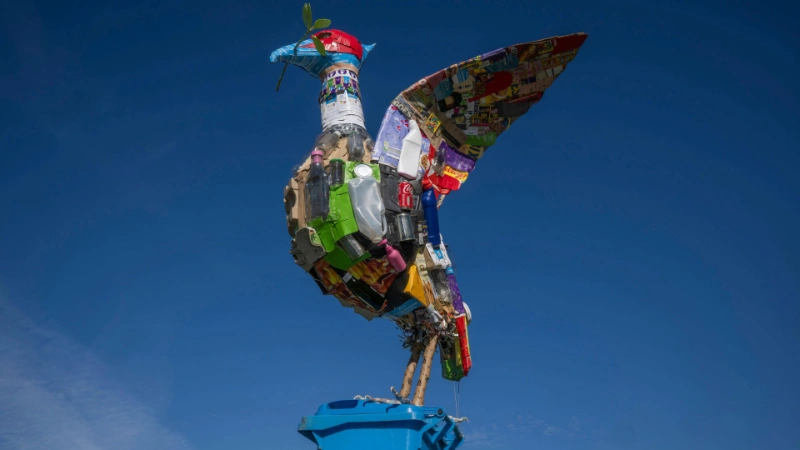
The campaign it came up with was a good Liverpool one. “We’re Talking Bins” gave the purple bin and its blue counterpart a personality and had them argue with each other. To launch it, the council unveiled a giant “Third Liver Bird” made entirely from recyclable materials, the work of Liverpool based artist Faith Bebbington. Two Liver Birds on the Liver Building, and a third made of rubbish.
The purple bin is changing
The bigger shake-up is food. Weekly food waste collections have been rolling out across the city in phases since autumn 2025, and the council estimates that food takes up about a third of the average bin. Take that out and the purple bin needs emptying less, which is why households that don’t meet the eligibility criteria for an extra purple bin are having the additional ones removed.
So the bin that became a badge of belonging is slowly being asked to do less. The system around it will keep changing, and you’d bet the colour outlasts it. A compromise that was meant to keep two sets of football fans from arguing ended up as a civic colour, a boundary line and a running joke, which is a lot of work for a wheelie bin.
Jack · 7 October 2026 · 4 min read