

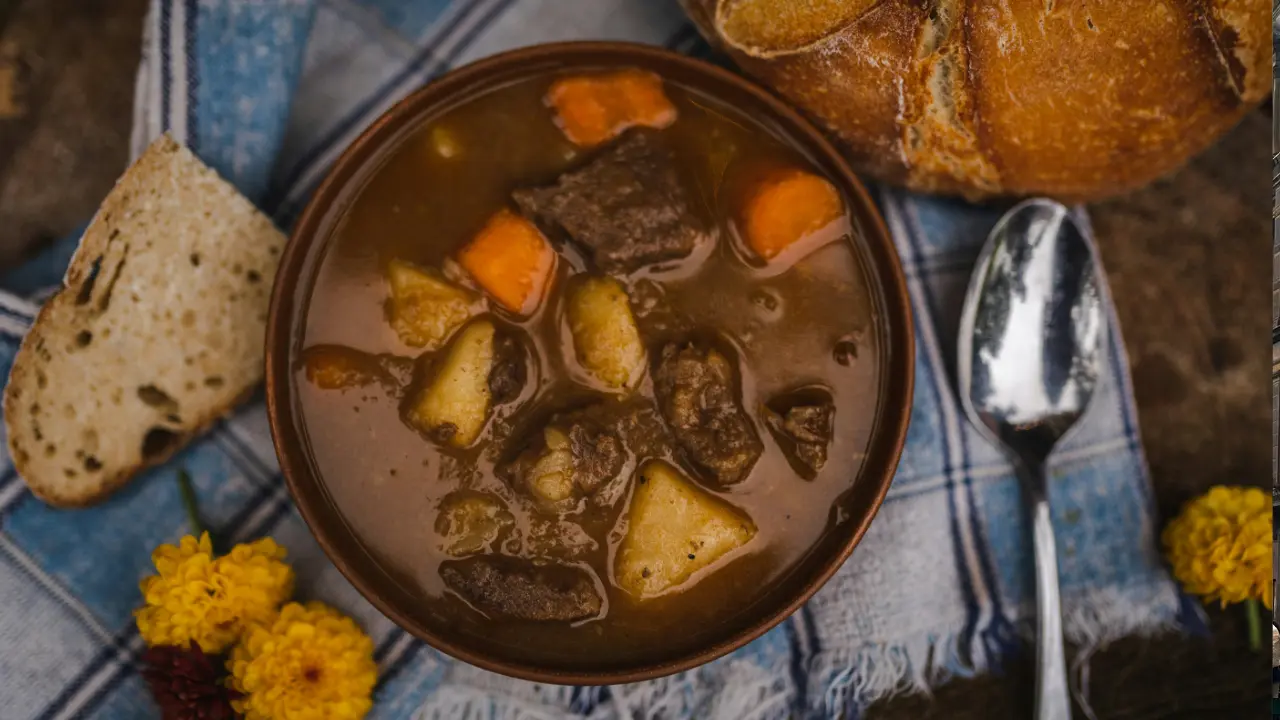
The short answer is that an entire city, its people and its accent, are all named after a pot of stew. The longer answer is one of the better stories Liverpool has to tell about itself.
A bit of history
First off, Liverpool had the world’s first commercial wet dock, built in the early 18th century that quickly grew into the one of the world’s greatest ports of the age – You could argue that Liverpool was part of the backbone of the British industrial revolution.
The fact that we had such a major port drew in huge amounts of traffic – migrant workers, sailors, and even simple thoroughfare traffic from China to Ireland. This made us a kind of melting pot of culture.
It starts with a stew
Lobscouse – it’s warm, cheap, and fills you up. It’s throught to have originated in Scandinavia, but the working class Liverpudlians took a liking to it. If you’ve spent five minutes around a scouser, you’ll know we use shorthand as much as possible. The Hospital becomes The ‘Ozzy, Beverage becomes Bevvy, and Lobscouse becomes Scouse.
The stew was generally made of beef, potatoes, onions, and whatever else was at hand – sometimes thickened with crumbled ship biscuit. It was the food of the lower deck, boiled up on long voyages from salt beef and hardtack when nothing fresher was available. The word first appears in print in the early 1700s, though where it actually came from nobody can say for certain. The most popular guess traces it to the Norwegian lapskaus, and versions of the same dish were eaten right around the northern seaboard, the German Labskaus among them, all of it carried from port to port in sailors’ bellies.
How it became Liverpool’s
A dish that travels with sailors was always going to wash up in a great port, and by the late 1700s the potato-heavy version had become a staple of the Liverpool working class. It was genuinely the food of hard times: a record from the city’s poorhouse in the 1790s lists bulk orders of beef, potatoes and onions bought specifically to make scouse. When meat was beyond reach, families made it without, and that meatless version earned its own local name, blind scouse. Other towns ate their own takes on it, the Potteries still call theirs “lobby”, but only Liverpool ever turned the dish into a name for its people.
From the pot to the people
By the middle of the 1800s “lobscouse” had been worn down to plain “scouse” in everyday Liverpool talk. The leap from the dish to the diners came later, in the twentieth century, and the two world wars did much of the work: servicemen thrown together from every corner of the country traded nicknames. If you were seen dining with a bowl of lobscouse, you’d be easily identified as a scouser.
So, why Scouse?
Because Liverpool is a port – a big one at that, and a port lives on what the world brings in. The sailors brought a stew, the city adopted it and took its name from it, and the same churn of arrivals handed the place its unmistakable voice.
Scouse today
Every scouser has a special place in their heart for a bowl of scouse. I’ve had full conversations with Uber drivers about how great it was warming your cold hands on a hot bowl after playing in the snow. About how my mum made better scouse than his mum, and it’s not even close.
If you’re after a bowl of scouse today, there’s no replacement for making it yourself. In fact, try ordering it at a restaurant and you’ll end up with whiplash. £10-£15 a bowl. Try telling that to the sailors of yore.

This article is mentioned elsewhere